
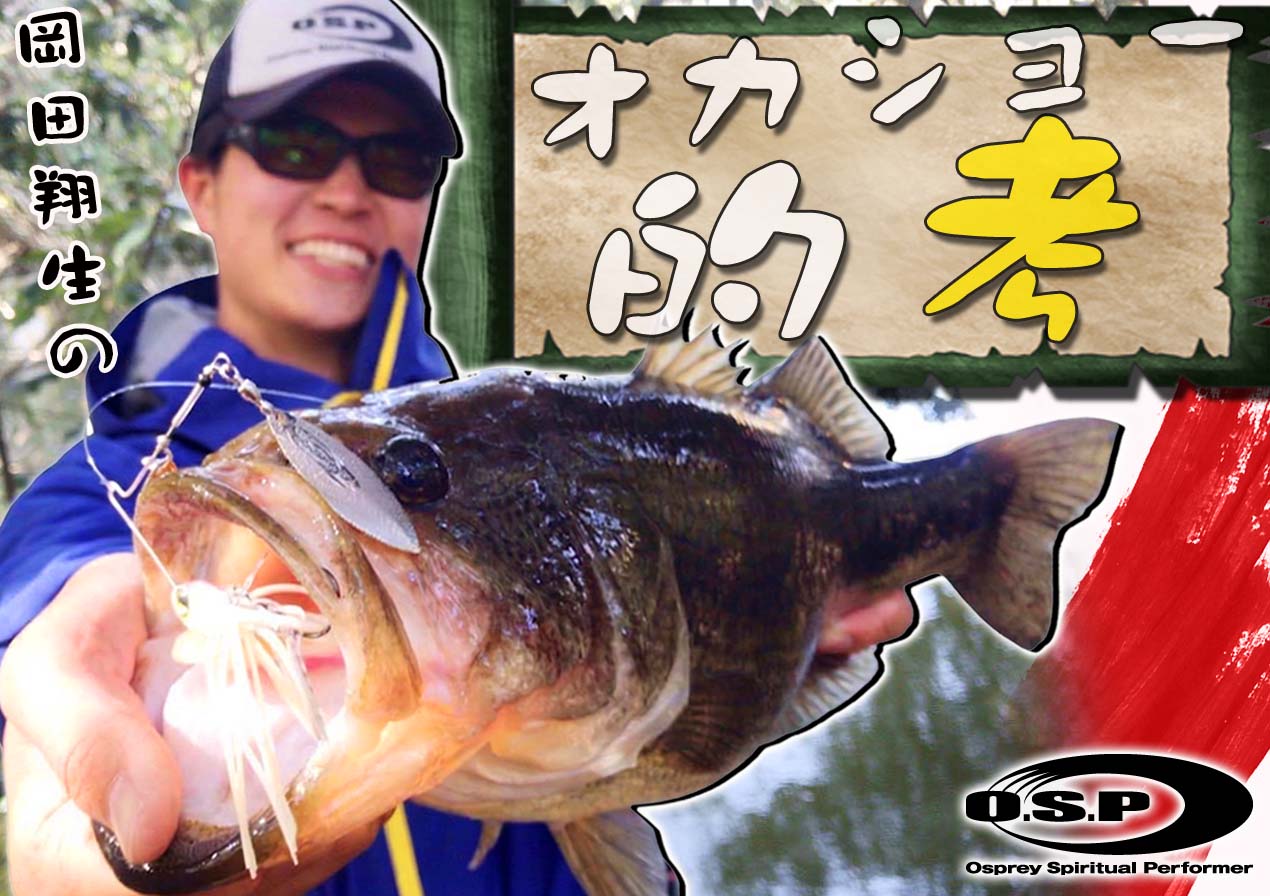
If you think your Texas Rig setup is already dialed in — think again. Japanese bass fishing pro Okada Shogo (aka “Okasho”) just dropped a deep-dive breakdown of his favorite straight hooks and a knot choice that will genuinely change the way you fish heavy cover forever. This is pure JDM knowledge you’re NOT getting from your local tackle shop. Let’s get into it. 🔥
- What Okasho Demands from a Texas Rig Hook
- Okasho’s Favorite Hook #1: Hayabusa FPP Straight 🪝
- Okasho’s Favorite Hook #2: Decoy Flippin’ Straight by Katsuichi 🪝
- The Snell Knot: Why Okasho Uses It for Every Texas Rig Setup 🎯
- Benefit #1: Superior Initial Hook-Up Rate
- Benefit #2: Full Control Over Soft Bait Orientation 🔄
- The JDM Rabbit Hole Goes Even Deeper
- Where to Buy JDM Gear
What Okasho Demands from a Texas Rig Hook
When you’re punching through gnarly heavy cover — laydowns, matted grass, dock pilings — your hook has to perform under brutal conditions. Okasho lays out his three non-negotiable criteria, ranked by priority:
① Hook penetration that doesn’t fold against hard mouths — a deep, solid, locked-in hook set every single time.
② Shank length and gape width balance — a shape that works with as many soft baits as possible.
③ Snag-resistant performance — keeping the hook point buried and weedless (though this also depends on your soft bait choice).
This priority order is key. Notice that hook penetration comes FIRST. That’s the JDM mindset — no excuses when it comes to actually landing the fish once it bites. 💪
Okasho’s Favorite Hook #1: Hayabusa FPP Straight 🪝
This is Okasho’s number one most-used straight hook, and honestly, once you understand why, you’ll want to stock up immediately.
The Hayabusa FPP Straight (FF201) features a fundamentally orthodox shape and wire diameter — nothing flashy, just built right. It also comes with a loop stopper built in, which is a massive practical bonus. It’s widely available in Japan, making it a perfect entry point for anglers new to straight hook Texas Rig setups.
Here’s the spicy detail that separates JDM thinking from the rest: no fluorine (fluorocoating) on the hook point. You might think a slicker hook = better penetration, but Okasho explains it perfectly — when you’re hiding the hook tip inside a soft bait and hammering heavy cover, a fluorine-coated hook actually causes the soft bait to slip and misalign. That’s a disaster for hook-up ratios. Since Okasho prefers softer-textured soft baits, a non-fluorine hook is his baseline requirement for any hook selection.
Pro Tip from Okasho: Before rigging with the Snell Knot (more on that below), he crushes the barb (ken/ケン) located between the eye and the stopper flat with pliers. Why? Two reasons:
- The barb physically interferes with tying a clean Snell Knot along the shank.
- A crushed barb = a clear visual indicator that the hook is already used/prepped, so you never accidentally grab an unrigged hook from your box. Smart. 🧠
Recommended Pairings:
- O.S.P Drive Craw 3in → #1/0 or #2/0
- O.S.P Drive Stick 4.5in (Weightless) → #3/0
- O.S.P Drive Beaver 3.5in → #2/0 or #3/0
Okasho’s Favorite Hook #2: Decoy Flippin’ Straight by Katsuichi 🪝
The Katsuichi DECOY Flippin’ Straight (WORM144) is slightly thinner wire than the FPP Straight, with a clean standard profile. It shines with slender-profile straight worms where you want a more subtle hook presence.
But here’s the real reason Okasho keeps this in his box — the #1 size. The Hayabusa FPP Straight only goes down to #1/0 at its smallest. The DECOY Flippin’ Straight goes all the way to #1, filling a gap in Okasho’s hook lineup for finesse cover applications. Working 18lb+ heavy tackle is Okasho’s standard, but even within that system, downsizing your hook for a smaller soft bait matters. The stopper on this hook is more delicate than the FPP Straight, so it’s better suited to precise, methodical presentations rather than all-out power fishing.
Recommended Pairing:
- O.S.P Drive Beaver 3in → #1
The Snell Knot: Why Okasho Uses It for Every Texas Rig Setup 🎯
Most anglers default to the Palomar Knot — and Okasho does too, for most applications. But for Texas Rig? It’s Snell Knot, no exceptions. Here’s why this JDM-level detail is a game-changer:
Benefit #1: Superior Initial Hook-Up Rate
When tension is applied to a Snell Knot, the physics of the knot cause the hook to rotate upward — driving the hook point into the fish’s mouth at the very earliest moment of the bite. With a straight hook, that rotational force translates into a deep, thick, fully committed hook set even against tough, bony bass mouths.
The practical result? Even if a hooked bass wraps you around cover and gets suspended mid-air in heavy structure, you’re not losing that fish. The hook is buried too deep. (Okasho’s reminder: always use line heavy enough that you can actually go in and retrieve the fish — don’t break off. Land every bass you hook. 🙏)
Benefit #2: Full Control Over Soft Bait Orientation 🔄
This is Okasho’s biggest personal reason for choosing the Snell Knot, and it’s pure JDM geekery at its finest.
Take the O.S.P Drive Craw 3in — one of Okasho’s most-used soft baits. The Drive Craw is intentionally designed with different specific gravities on the belly vs. the back — the back is non-salt material, which makes it naturally float upward, ensuring the bait always orients correctly in the water (belly down, claws up).
When you rig this with a Snell Knot and apply even minimal line tension, the knot’s geometry automatically corrects and locks the soft bait into the proper orientation. This matters enormously when you’re swimming the bait with a pumping up-down action — a correctly oriented Drive Craw pushes water more efficiently, generating stronger action and more displacement pressure. More vibration, more attraction. 🦐💥
There’s another layer of genius here: a Texas Rig is inherently unstable — the line passes through the center of the bullet sinker, distributing weight evenly, which makes the whole rig prone to rolling and spinning randomly on the fall. The Snell Knot gives you an ON/OFF switch for bait stability — unstable and erratic on the fall (triggering reaction strikes), then instantly stable and correctly oriented the moment you apply line tension (maximizing action on the retrieve and swim).
That micro-moment when a bass barely mouths the bait? With the Snell Knot’s hook angle already primed, you can aggressively set the hook first without waiting for the fish to fully commit. That’s elite-level JDM fishing mechanics. 🎣
The JDM Rabbit Hole Goes Even Deeper
Okasho himself admits this article ballooned way beyond his original plan — he only covered straight hooks and knots, and it already became a full deep-dive. His favorite offset hooks for cover fishing are coming in the next installment. If straight hook knowledge is this detailed, the offset hook breakdown is going to be absolutely wild.
The bottom line: in JDM bass fishing culture, every single component of your rig is a deliberate decision. Hook model, hook size, wire gauge, coating choice, knot type — all of it compounds into a rig that is objectively more effective than a casually assembled setup. This is why Japanese bass tackle runs so deep, and why overseas anglers who tap into JDM knowledge consistently level up their fishing. Don’t sleep on the details. 🇯🇵🔥
Where to Buy JDM Gear
If you want to get your hands on authentic Hayabusa FPP Straight hooks and other premium JDM bass tackle straight from Japan, eBay is your best pipeline. Japanese sellers regularly list mint-condition and hard-to-find JDM tackle that simply never makes it to international retail shelves. Hunt smart, stock up, and rig like the pros do in Japan. 🛒
コメント