
- The Autumn Bite Is ON — And Japanese Pros Are Already Dialed In 🍂
- Technique #1: The “Judy Chatter” — Autumn’s Ultimate Reaction Combo ⚡
- Recommended Judy Chatter Setup & Colors 🎨
- Technique #2: Coike Fish Gill L — The Secret Blade Tune 🔧🔥
- The Blade Tune Setup — Step by Step 🛠️
- When to Use Each Rig — Reading the Conditions 📊
- Tackle Setup — One Rig to Run Both Techniques 🎯
- Why These Techniques Work Globally 🌐
- Where to Buy JDM Gear
The Autumn Bite Is ON — And Japanese Pros Are Already Dialed In 🍂
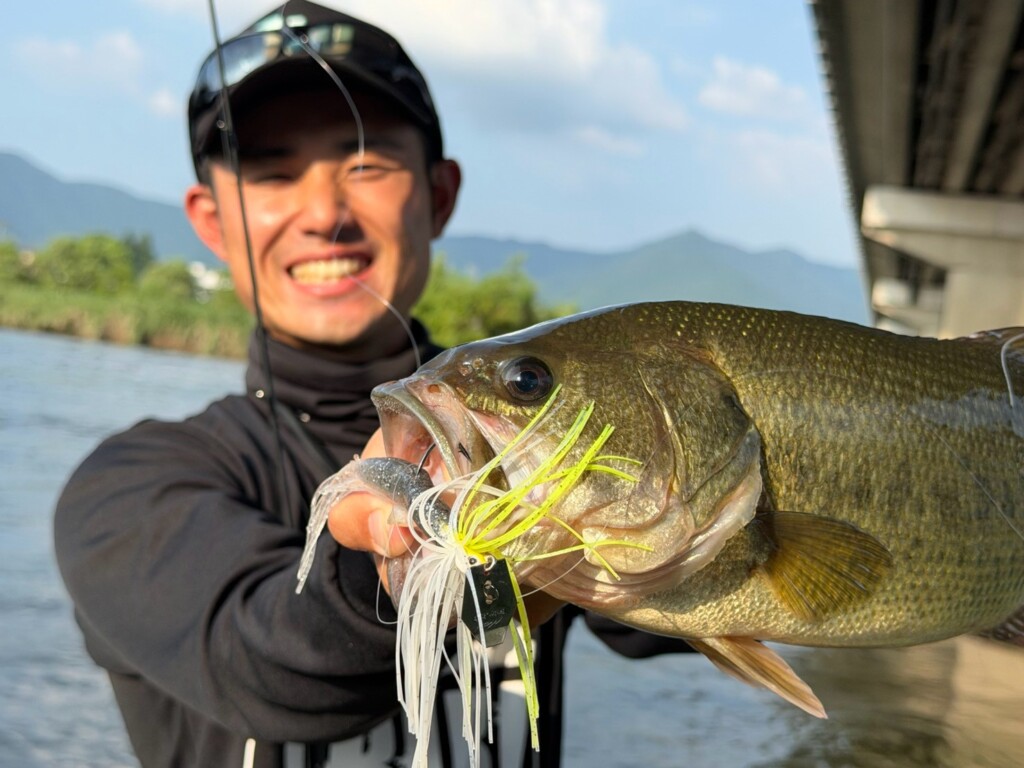
When the morning air turns crisp and water temperatures start their seasonal drop, Japanese bass anglers know exactly what that means — it’s reaction bait season. And HIDEUP staff pro Kaito Honda has been absolutely destroying it on the water with two very specific, very deadly techniques that he’s been quietly refining all season long.
In Japan, autumn bass fishing typically kicks off when water temps fall from the high 20°C range down toward the 15–18°C zone. At this temperature window, bass transition from lethargic summer patterns to aggressive, horizontal feeding frenzies — actively chasing baitfish in the mid to upper water column. They’re moving fast, covering ground, and absolutely hammering reaction lures.
For anglers in the Southern Hemisphere (Australia, New Zealand, South Africa) — this is your early spring pattern, roughly September to November, when your water temps are climbing into that same 15–18°C sweet spot and bass are coming out of their winter funk. These two techniques translate perfectly. 🌏
Let’s break down both techniques straight from the man himself.
Technique #1: The “Judy Chatter” — Autumn’s Ultimate Reaction Combo ⚡
The first technique is pure JDM genius: pairing the HIDEUP Judy Fish 4.2″ as a trailer on a chatterbait — a combo Honda calls the “Judy Chatter.”
Now here’s the fascinating part that makes this more than just random trial-and-error. Honda went straight to the source — Judy Fish developer Pro Nishikawa — and got some critical intel: the Judy Fish was deliberately designed with a water-shedding body shape to target deep fish. Its profile is engineered to minimize water resistance, which means it’s far more effective at faster retrieves than slow, finesse presentations.
The lightbulb moment? A low-resistance trailer + the vibrating chaos of a chatterbait blade = a match made in fishing heaven. 💡
Honda started testing it, and the results were, in his own words, almost unbelievably consistent — catching fish on every single outing since making the switch. That’s not luck. That’s JDM engineering working in perfect harmony.
Recommended Judy Chatter Setup & Colors 🎨
Here’s the exact setup Honda recommends for shore fishing (bank anglers, this one’s for you):
① Weight
- 1/4 oz is the sweet spot for shore casting
- Not too fast, not too slow — keeps the lure in the strike zone longer and handles shallower ranges effortlessly
② Color
- Honda’s top pick: Silver Glitter
- This color works with any chatterbait head color you pair it with
- When that fluffy tail kicks and flutters, it fires off intense, wide-range flashing that mimics a panicked baitfish school — irresistible to autumn bass in feeding mode 🐟✨
③ Rigging Tip
- When threading the Judy Fish onto the chatterbait hook, mount the body with a slight upward curve (back-bent) — this subtle angle dramatically improves the lure’s action and keeps it tracking true at speed
Pro tip: Check out Honda’s Instagram (@kaito6.16) for actual on-water footage of this combo in action — the strikes are absolutely savage.
Technique #2: Coike Fish Gill L — The Secret Blade Tune 🔧🔥
The second technique centers on the HIDEUP Coike Fish Gill L, a lure that’s been generating non-stop catch reports across Japan. The standard rig is the Moriken Rig, but Honda has gone full mad-scientist mode with a blade tune modification that’s been producing absolutely violent strikes.
The Coike Fish Gill L features a flat body profile on each individual segment — meaning even on the fall, it rocks and flutters left-to-right with serious fish-attracting action. It’s already a deadly lure in stock form. The blade tune takes it to another dimension entirely.
The Blade Tune Setup — Step by Step 🛠️
Here’s Honda’s exact configuration:
- Hook: RPZ Talisman #1
- Blade: Kachitto Blade (snap-on style)
The key modification is in where you tie your line. Normally, you’d tie directly to the RPZ Talisman’s swivel. For the blade tune, you shift the line tie to a different position on the hook, and then snap the Kachitto Blade directly onto the swivel that you’d normally use for the main line.
The result? The blade hangs off the swivel and spins freely, generating intense flashing and additional vibration that amplifies the baitfish illusion to a whole new level. Bass see it. Bass lose their minds. Bass eat it. 🤯
When to Use Each Rig — Reading the Conditions 📊
Honda’s field-tested breakdown for switching between the two Coike Fish Gill presentations:
- Normal Moriken Rig → High-light conditions, clear water — when you want a natural, subtle presentation that doesn’t spook wary fish
- Blade Tune → Low-light conditions, stained or murky water — when you need maximum appeal and visibility to cut through reduced water clarity and trigger reactionary strikes
Matching your rig to the conditions is what separates consistent anglers from lucky ones. This is exactly the kind of nuanced, data-driven thinking that makes Japanese bass fishing so refined.
Tackle Setup — One Rig to Run Both Techniques 🎯
The beautiful thing about these two techniques? They run on identical tackle, so there’s zero need to have a dedicated rod for each.
- Rod: NEW MACCA 66M+ (any Medium class rod works fine)
- Reel: Baitcasting reel (High Gear ratio recommended for maintaining line speed on reaction presentations)
- Line: Absolute AAA 12lb (the ideal balance of castability and control — 12lb is Honda’s non-negotiable choice)
This is a clean, versatile setup that lets you work both the Judy Chatter and the Coike Blade Tune back-to-back without retying or switching rods. Efficiency matters when the bite window is hot. ⏱️
Why These Techniques Work Globally 🌐
These aren’t just Japan-specific patterns. The underlying science is universal:
- Falling water temps (or rising, for Southern Hemisphere anglers) trigger aggressive horizontal feeding
- Reaction baits outperform finesse presentations when bass are actively chasing
- Flashing and vibration are cross-species triggers that work on aggressive predatory fish worldwide
Whether you’re fishing a Japanese reservoir in Shiga Prefecture, a dam lake in Queensland, Australia, or a bass fishery in South Africa during your spring warm-up — the biology is the same. Adapt the water temp trigger, run these techniques, and expect results.
Where to Buy JDM Gear
If you’re serious about getting your hands on authentic HIDEUP soft baits like the Judy Fish and Coike Fish Gill L, eBay is hands-down your best gateway to genuine JDM tackle shipped direct from Japan. Japanese sellers on eBay consistently stock hard-to-find soft plastics, hooks, and accessories that simply don’t make it to international retail shelves. Don’t sleep on it — the good stuff moves fast. 🇯🇵📦

コメント