
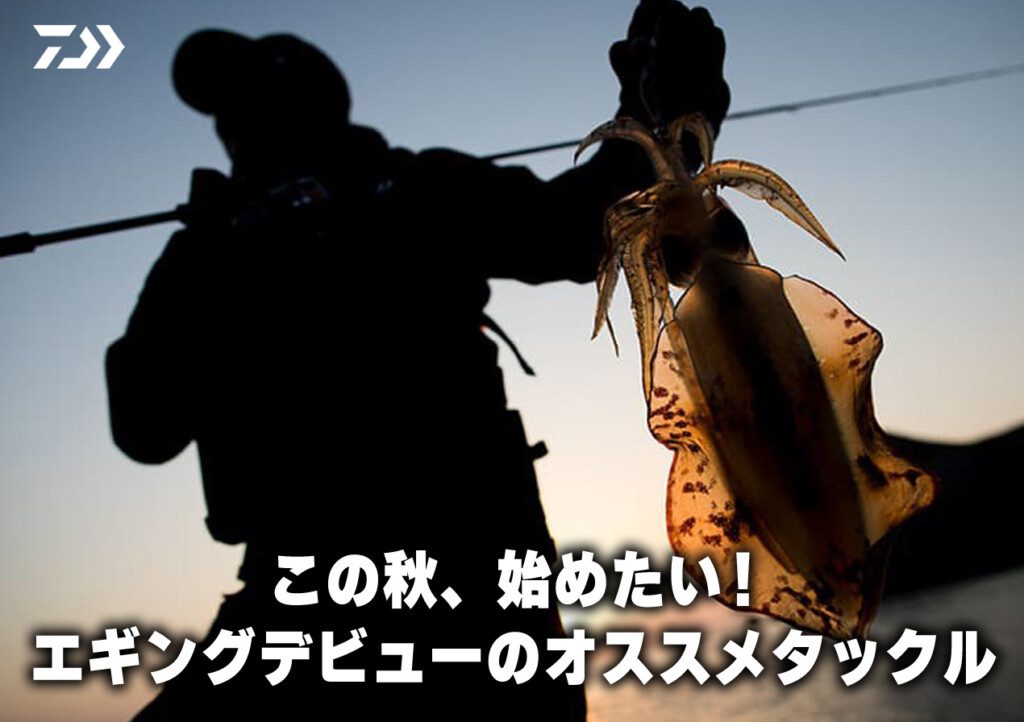
Alright, let’s talk about one of the most addictive forms of saltwater fishing on the planet — Eging (squid jigging). 🎣 Autumn is THE season when the squid fishing scene in Japan absolutely explodes, and if you’ve been on the fence about getting into it, there has never been a better time to pull the trigger.
Now, full disclosure — I’m a Shimano guy at heart. You all know that. But I’m a professional first, and I’ll give credit where it’s absolutely due: Daiwa’s Emeraldas lineup is a seriously well-thought-out ecosystem for squid anglers, especially for beginners. The gear is cohesive, purpose-built, and genuinely impressive for the price points. Let’s break it all down. 🇯🇵
- What Is Autumn Eging? A Quick Note for Global Anglers 🌏
- The Essential Tackle Setup: Rod & Reel First 🎣
- Rod: Daiwa Emeraldas X — The Perfect Entry Point 🏆
- Reel: Daiwa Legalis LT2500 — Punching Way Above Its Weight 💪
- Line Selection: PE + Leader Is Non-Negotiable 🧵
- PE Line: UVF Emeraldas Dura Sensor ×8 + Si2 🌊
- Leader: Emeraldas Fluoro Leader 🪢
- Egi (Squid Jig) Selection: What to Throw 🦑
- Egi: Emeraldas Dart LC — The JDM Benchmark 🎯
- Must-Have Accessories & Gear ⚙️
What Is Autumn Eging? A Quick Note for Global Anglers 🌏
In Japan, Autumn Eging (roughly September through November) is the high-action “numbers season.” Water temperatures drop from summer peaks into the 18–22°C range, which triggers young-of-the-year squid (Todarodes pacificus — Japanese Flying Squid, and Sepioteuthis lessoniana — Bigfin Reef Squid) to move into shallower coastal waters in massive numbers. They’re aggressive, they’re hungry, and they’re easier to catch — making autumn the perfect time for beginners to get their first squid on the deck.
For anglers in the Southern Hemisphere (Australia, New Zealand, South Africa): Your equivalent prime season runs March through May when your autumn water temps hit that same sweet 18–22°C window. Southern Calamari (Sepioteuthis australis) behaves very similarly — moving shallow, feeding aggressively. Everything in this guide applies directly to your conditions. 🦑
The Essential Tackle Setup: Rod & Reel First 🎣
You can technically use a bass or seabass rod as a substitute, but trust me — dedicated eging tackle makes a massive difference, especially when you’re learning. The rod action, sensitivity, and tip responsiveness are tuned specifically for the “cast and jerk” (シャクリ) technique that drives squid crazy.
Rod: Daiwa Emeraldas X — The Perfect Entry Point 🏆
The Daiwa Emeraldas X is the recommendation for your very first eging rod, and honestly, it’s a solid call. Priced in the mid-10,000 yen range (roughly USD $90–100), Daiwa has pumped knowledge from their higher-end Emeraldas models straight into this entry-level stick. The result? A rod that makes casting and jerking feel natural even if you’ve never held an eging rod before.
Recommended Length & Power:
- 8ft 6in (2.59m) is the sweet spot for beginners — versatile enough for most shore spots
- ML (Medium Light): Go this route if you plan to focus on autumn eging with #2.5 and #3.0 egi sizes
- M (Medium): Choose this if you also want to chase big spring squid with #3.5 and #4.0 egi
Specs at a Glance:
| Model | Length (m) | Sections | Folded (cm) | Weight (g) | Egi Size | PE Line (go) | Carbon (%) | Price (JPY) |
|---|---|---|---|---|---|---|---|---|
| Emeraldas X 86ML·J | 2.59 | 2 | 134 | 103 | #1.8–3.5 | 0.5–1.0 | 99 | ¥18,600 |
| Emeraldas X 86M·J | 2.59 | 2 | 134 | 106 | #2.5–4.0 | 0.5–1.2 | 99 | ¥18,900 |
99% carbon content at this price point? Yeah, Daiwa is not playing around. The blank is lightweight, responsive, and communicates squid bites with surprising clarity. For those just starting out, the 86ML is the go-to pick for autumn sessions.
Reel: Daiwa Legalis LT2500 — Punching Way Above Its Weight 💪
Okay, I’ll admit it — as much as I bleed Shimano blue, the Daiwa Legalis at around ¥10,000 retail is genuinely impressive. And the tech they’ve crammed in here is legitimately wild for the price.
What makes it stand out:
- Air Drive Design and Zaion V rotor — lightweight and smooth
- Screw-in handle at this price tier?! This is HUGE. It eliminates handle wobble and dramatically improves sensitivity — critical for detecting the subtle “thump” of a squid attack
- LT2500 size is the ideal match for eging
Handle options:
- Single handle (LT2500S-XH): More versatile if you fish multiple styles
- Double handle (LT2500S-DH): Highly recommended for dedicated eging — it prevents the handle from free-spinning during the fall, allowing perfectly consistent retrieves. This is the JDM way. 🇯🇵
Specs at a Glance:
| Model | Weight (g) | Retrieve/Turn (cm) | Gear Ratio | PE Capacity | Bearings | Max Drag (kg) | Price (JPY) |
|---|---|---|---|---|---|---|---|
| 23 Legalis LT2500D | 190 | 75 | 5.3 | #1.0-140m | 5/1 | 10 | ¥13,600 |
| 23 Legalis LT2500S-XH | 185 | 87 | 6.2 | #1.0-140m | 5/1 | 5 | ¥13,600 |
| 23 Legalis LT2500S-DH | 200 | 75 | 5.3 | #1.0-140m | 5/1 | 5 | ¥14,800 |
Pro tip: The XH (Extra High) gear ratio at 6.2:1 is now the modern standard in Japanese eging. It picks up line fast after each jerk sequence, keeping you in constant contact with the egi during the critical fall phase. 🔥
Line Selection: PE + Leader Is Non-Negotiable 🧵
This is where beginners often cut corners — don’t. The PE line + fluorocarbon leader combo is absolutely essential for eging. PE gives you the sensitivity and casting distance; the leader provides abrasion resistance and reduces line visibility near the egi.
Always go 8-braid over 4-braid. The round cross-section of 8-braid means quieter line noise through the guides, better casting distance, and smoother performance overall.
PE Line: UVF Emeraldas Dura Sensor ×8 + Si2 🌊
The UVF Emeraldas Dura Sensor ×8 + Si2 is Daiwa’s dedicated eging PE line, and it checks every box for beginners and experienced anglers alike. The 5-color marking system helps you track line depth at a glance — super useful when counting down your egi to the strike zone.
Recommended sizes:
- #0.6 (11lb / 4.9kg): Standard choice for most eging situations
- #0.8 (15lb / 6.8kg): Better choice for rocky areas where snags are a concern
| Model | Strength (lb) | Strength (kg) | Size (go) | Length (m) | Braids | Price (JPY) |
|---|---|---|---|---|---|---|
| UVF Emeraldas Dura Sensor ×8+Si2 0.6-150 | 11 | 4.9 | #0.6 | 150 | 8 | ¥2,350 |
| UVF Emeraldas Dura Sensor ×8+Si2 0.8-150 | 15 | 6.8 | #0.8 | 150 | 8 | ¥2,350 |
Leader: Emeraldas Fluoro Leader 🪢
The Emeraldas Fluoro Leader is designed specifically for eging with a Natural Green (seaweed color) finish that won’t spook wary squid. Knot strength is prioritized in the design — critical because the PE-to-leader connection is often the weakest link in your system.
Recommended sizes:
- #2 (8lb): Standard choice for most spots
- #2.5 (10lb): Go heavier in snag-heavy rocky terrain
| Model | Size (go) | Strength (lb) | Color | Length (m) | Material | Price (JPY) |
|---|---|---|---|---|---|---|
| Emeraldas Fluoro Leader 2-35 | #2 | 8 | Natural Green | 35 | Fluorocarbon | ¥1,000 |
| Emeraldas Fluoro Leader 2.5-35 | #2.5 | 10 | Natural Green | 35 | Fluorocarbon | ¥1,100 |
Must-learn knot: FG Knot. This is the gold standard connection between PE and fluorocarbon in Japanese lure fishing. It’s slim, strong, and passes through rod guides smoothly. Master this and you’re set for life. Daiwa has a great tutorial video on their official YouTube channel — look it up before your first session.
Egi (Squid Jig) Selection: What to Throw 🦑
Keep it simple to start. Sizes #2.5 to #3.5 cover 90% of eging situations. For autumn specifically, bring 2–3 pieces each of #2.5 and #3.0 — that’s your whole autumn arsenal sorted.
Color strategy for beginners: Start with pink and orange exteriors. High visibility colors help you track your egi in the water column while you focus on learning the jerk-and-fall technique. The deeper science of base colors (gold, red, blue, etc.) comes later — first, learn to move the jig properly.
Egi: Emeraldas Dart LC — The JDM Benchmark 🎯
The Emeraldas Dart LC is the centerpiece of Daiwa’s eging lineup — right in the middle of their range, purpose-built to teach you eging fundamentals. The dart action is intuitive to produce, and the magnetic weight transfer system locks the ballast weight forward at rest (maximizing distance on the cast) then releases during the jerk for maximum dart action. It’s genuinely clever engineering.
| Model | Weight (g) | Fall Speed (sec/m) | Price (JPY) |
|---|---|---|---|
| Emeraldas Dart LC 2.5 | 11 | 5.5 | ¥1,410 |
| Emeraldas Dart LC 3.0 | 16 | 4.0 | ¥1,410 |
| Emeraldas Dart LC 3.5 | 20 | 3.5 | ¥1,410 |
Note the fall speeds — slower fall (#2.5 at 5.5 sec/m) is deadly for autumn when squid are attacking on the fall. As you progress, you’ll start mixing fall speeds to find what’s triggering bites on the day. 🔥
Must-Have Accessories & Gear ⚙️
The Emeraldas ecosystem extends well beyond
コメント